Fireball II Basics
Playing pinball can be more fun if you know what you’re shooting for. I’ve just collected way too much pinball trivia and need an excuse to share it! Each week I’ll include a tiny guide for one of the machines you can play here.
Fireball II Basics
Fireball II is one of the older machines at Tiltshift. It was created in 1981 by the Bally Manufacturing Company (before their leadership went crazy buying hotels and six flags in the mid 80’s, and before Williams purchased Bally in 1988). Fireball II is one of the lesser-known machines in the Bally “Class of 81” and is the successor to the original electromechanical Fireball.
If you’re interested you can dig more into its history on IPDB or Pinside.
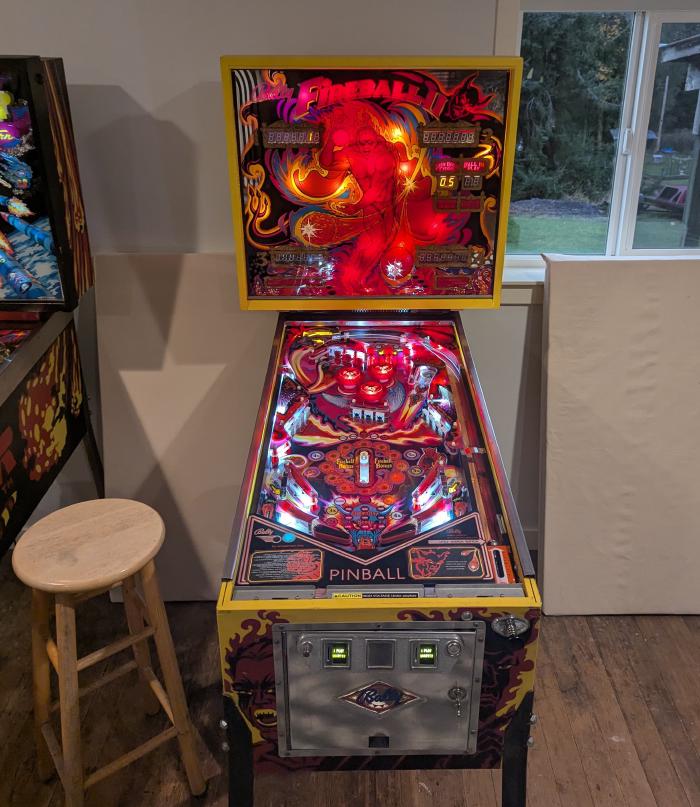
Fireball II is definitely simpler than a modern Stern, but it’s still got a lot going on. We’ll talk about each of these aspects over the next two posts:
- Two separate bonus ladders
- Three ball multiball
- ABCD roll-overs
- Little-demon ball save
So let’s learn how to earn some points on this machine!
Little Demon Post
One of the most unique aspects of the game is the Little Demon post between the flippers. This post can be flicked forward with the second button on the right side, saving the ball from a center drain if timed properly. This takes practice to time correctly and I often remember it just after the ball is solidly resting in the trough.
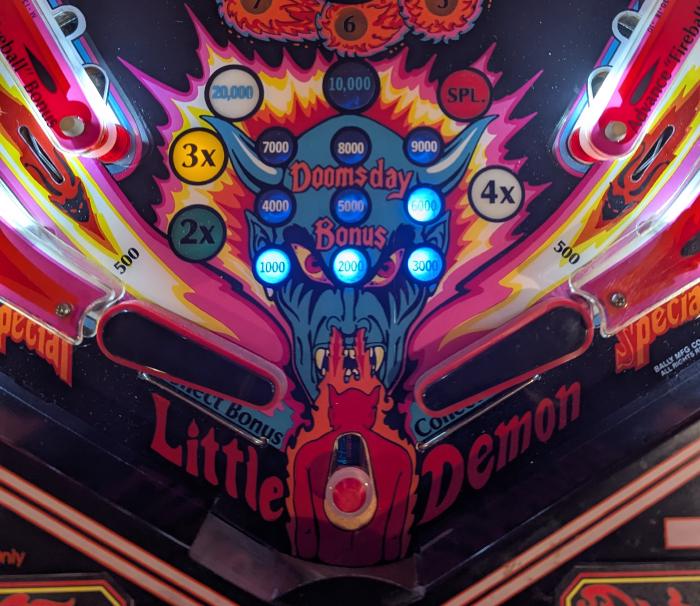
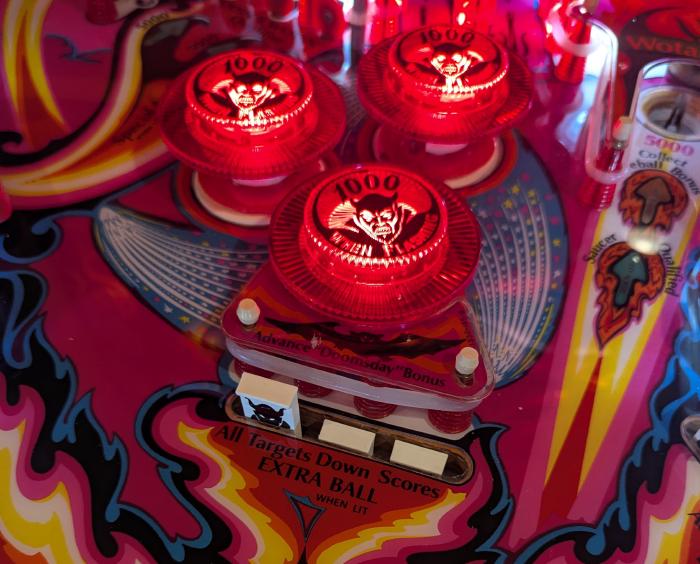
Only use it when necessary though. The game starts off with 5 uses of the post and any that are unused at the end of the game are cashed out for 10,000 points each. Additional uses of the post can be earned by knocking down all three center drop targets.
Multiball
A very common strategy on Fireball II is to work towards a multiball first, then work on racking up points. Before diving into how to start a multiball, we need to learn a little terminology.
First, the term “multiball” itself. On most pinball machines, there will be one or more ways to get multiple balls on the playfield at once. This can be really chaotic and stressful at first, but can also be really valuable. Often for the duration of the multiball some shots will be worth more points than usual. The other huge benefit is that draining a ball just ends multiball instead of ending your turn.
In order to start a multiball, you often need to “lock” a ball. Locking a ball means that the machine is holding onto that ball and a new one will be placed in the shooter lane to continue play. Once you’ve locked enough balls, they’re all released at once and the multiball begins!
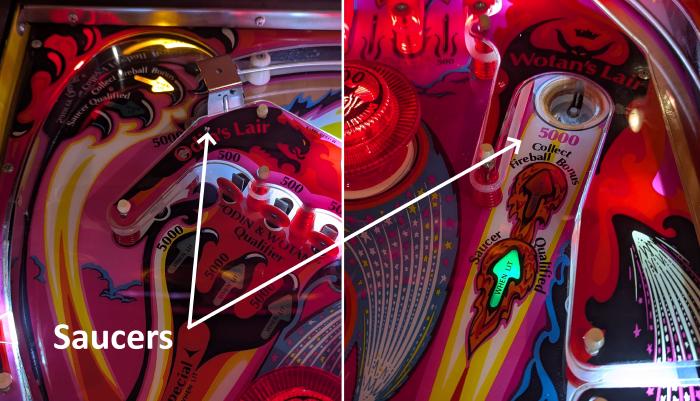
And finally, we need to know what a “saucer” is. Saucers are depressions in the playfield that the ball can land in. It will then be held there for some time, before the machine kicks it back out. Fireball II has two saucers, shown below.
Now that you know all the various pieces, let’s see how Fireball II brings them together in the rules to form its multiball.
The first step is to hit all three standup targets in the top left. When a target has been hit, it turns green.
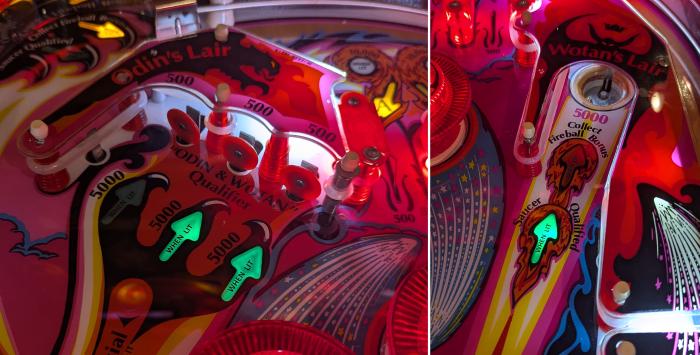
When all three have been hit, the machine says “Shoot for fire gods” and one of the two saucers will light a green arrow indicating that it will lock a ball there next time you shoot it.
Next, hit all three targets a second time, allowing you to lock a ball in the other saucer. Finally, once there’s a ball locked in both saucers, hit the targets a third time to release all the balls into play! Multiballs can be a little overwhelming at first, but this is a great machine for practicing ball control.
In the next post we’ll continue diving into the Fireball II rules and learn about bonus and bonus multipliers!
If you have any questions or topics you think would be interesting to cover, please let me know!